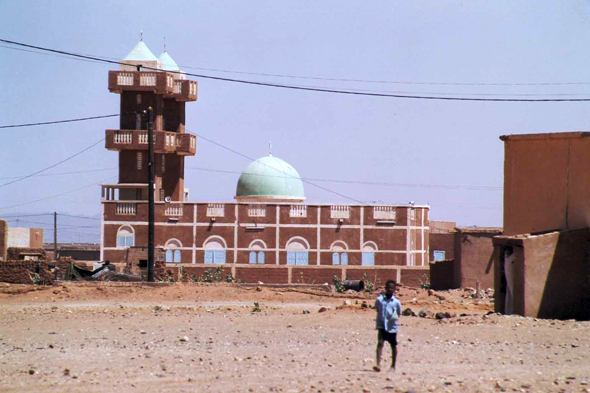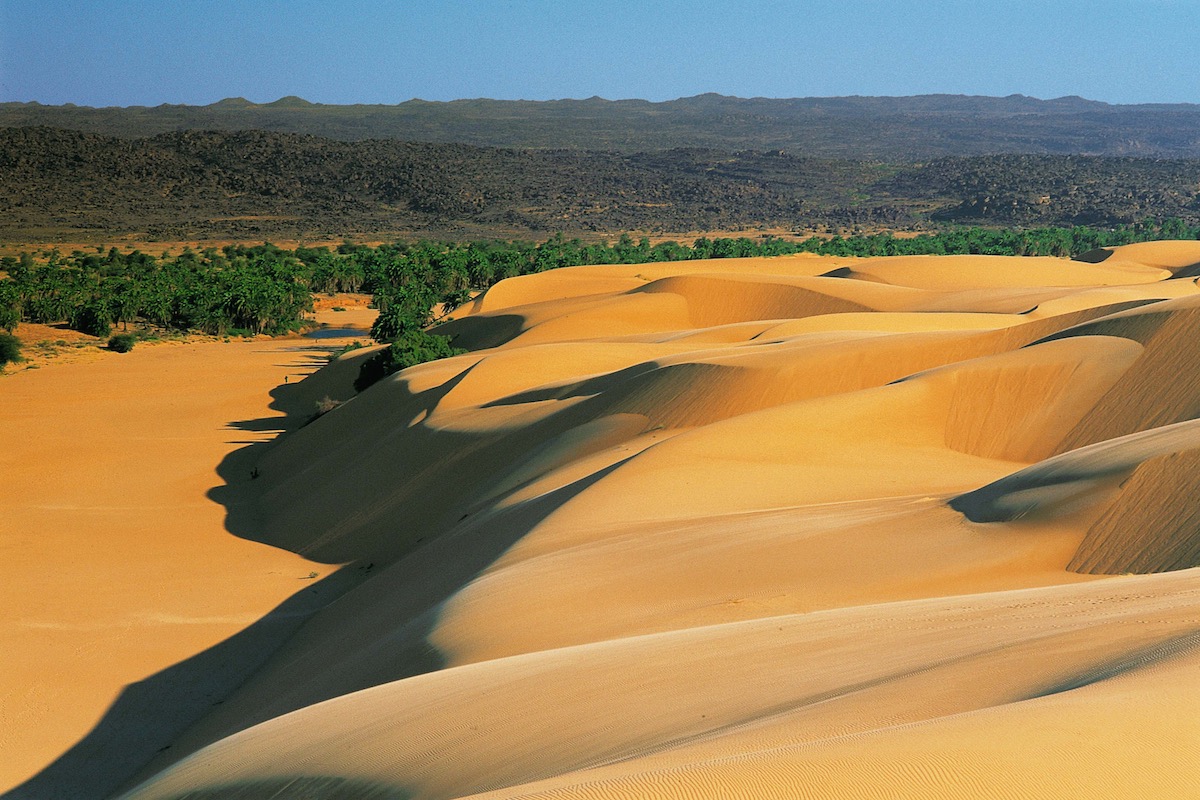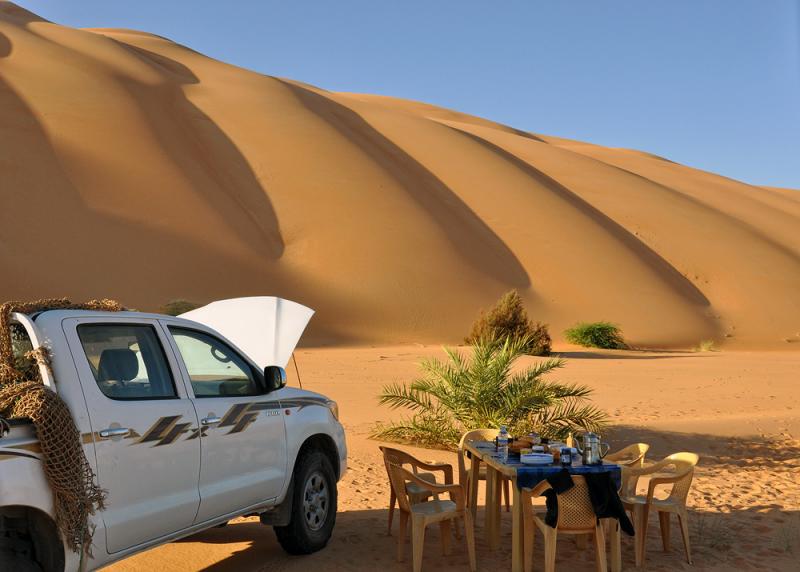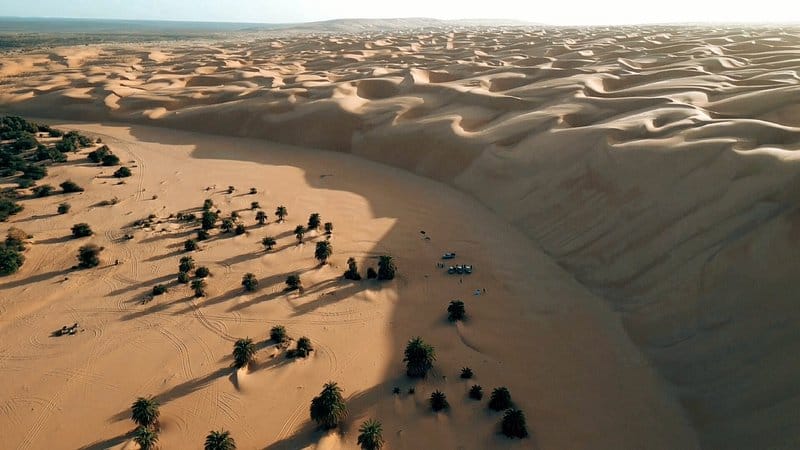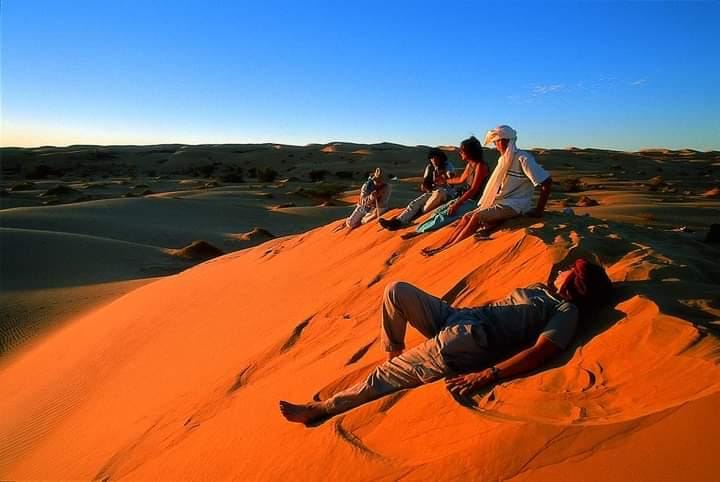
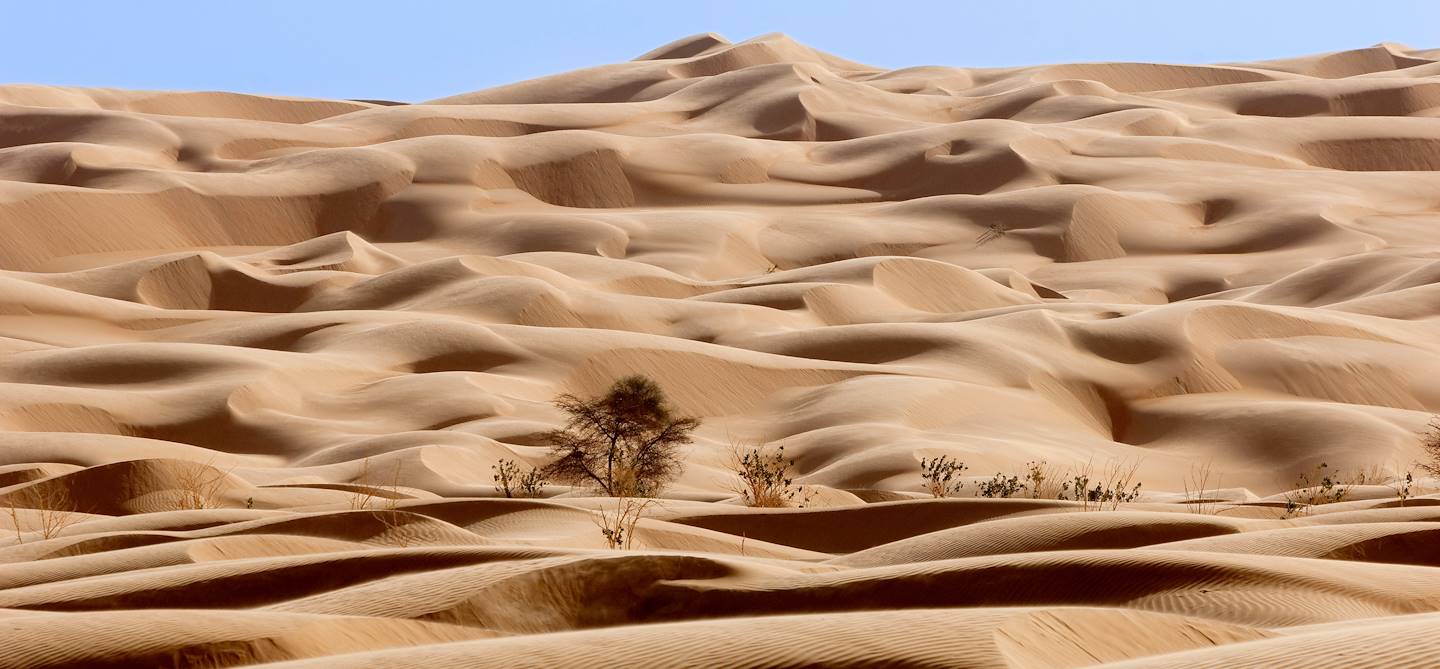
Akjoujt, capital of the Inchiri region, lies some 256 km north-east of Nouakchott in the heart of the Mauritanian desert. Its name is Berber in origin and means "the well" — a reminder of the water point that once sustained caravans crossing a land known for its scarcity of water. Today Akjoujt is one of the country's foremost mining towns, best known for the Guelb Moghrein deposit, rich in copper and gold. Archaeological studies have shown that copper was already being extracted here in the 8th century BC, some 2,800 years of continuous human activity. Between ancient and modern mining sites, the Saharan landscapes of Inchiri and a living nomadic culture, Akjoujt offers a journey where geology, history and tradition meet.
🇲🇷 Mauritania
Akjoujt
What to see
Oum Tounsi (Inchiri) — The 1932 Battle behind Nouakchott's Airport Name
For most travellers, the first Mauritanian word they ever read is this one: Nouakchott-Oumtounsy International Airport. The name comes from a battle. On 18 August 1932, at Oum Tounsi, a locality north of Nouakchott in the Inchiri region, a group of fighters — mainly Oulad Delim who had come from the Río de Oro — ambushed the Trarza nomad group, a French colonial detachment based at Boutilimit. The attack caught the column by surprise and inflicted heavy losses on the colonial troops and their local auxiliaries. Nearly a century later, the memory of the event still stirs lively debate in Mauritania: for the state and many historians it is a proud symbol of anticolonial resistance; for other voices, including the Moktar Ould Daddah Foundation, the clash looked more like a traditional razzia, since both sides included Mauritanians and the rivalries between tribes of the time weighed heavily. To visit Oum Tounsi is to stand on a quiet stretch of desert plain — and to leave with both stories. It makes a short stop from Nouakchott on the northern road, easily combined with the Inchiri, Akjoujt and the route towards the Banc d'Arguin.
El Asmaa (Inchiri) — Steppe, Herders and Night Skies on the Northern Road
Between Nouakchott and Akjoujt, where the steppes of the Inchiri open onto a horizon without limits, lies the small town of El Asmaa: a way station on the northern road, one of those places travellers come to not for a single monument but to find the true rhythm of the Mauritanian bush. Acacia steppe stretches over red earth threaded with dunes, and the herders' tents and camel herds provide the landscape's only movement. After the sparse seasonal rains, a carpet of short grasses covers the ground and the steppe turns into pasture, drawing nomad families from every direction in one of the finest seasons of the year. El Asmaa offers what cities cannot: a glass of tea under a tent, camel milk, conversation with the people of the place, and a night sky so clear it gives back every star, untouched by light pollution. Standing on the axis that links the capital to Akjoujt and on to Nouadhibou, it also makes a practical stop on a route combining the mines of the Inchiri, the battlefield of Oum Tounsi and the coast of the Banc d'Arguin.
Gallery