🇲🇷 Mauritania

Erg Amatlich

"Set your tents apart, bring your hearts together," says a Saharan proverb.

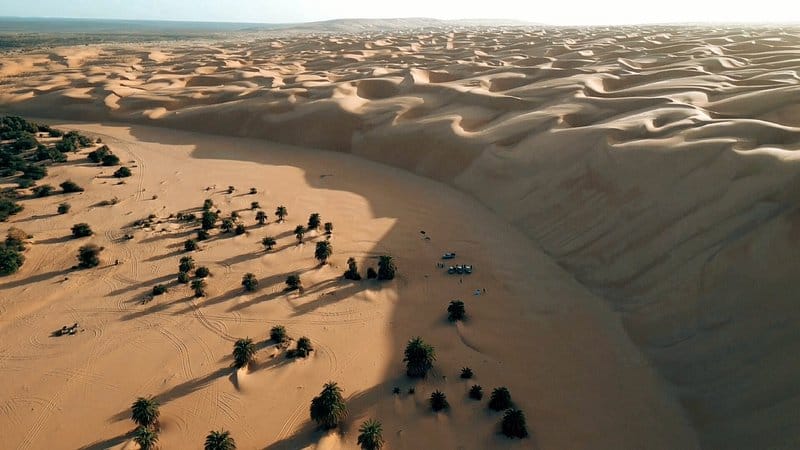
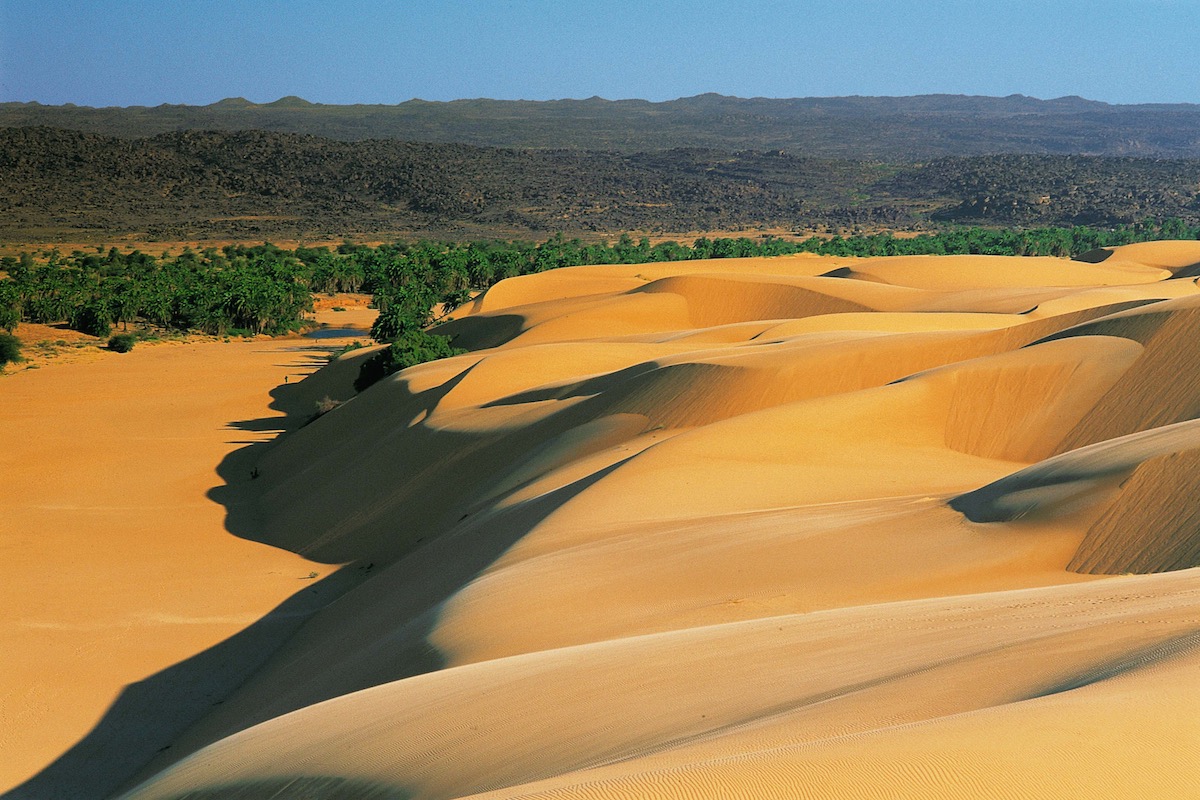
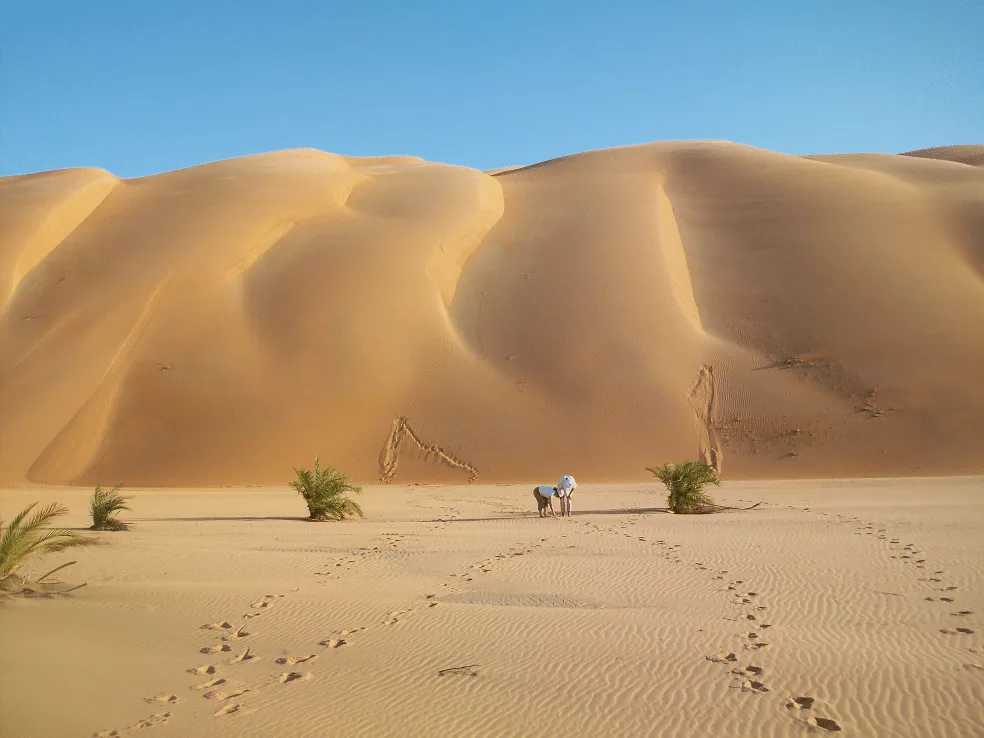
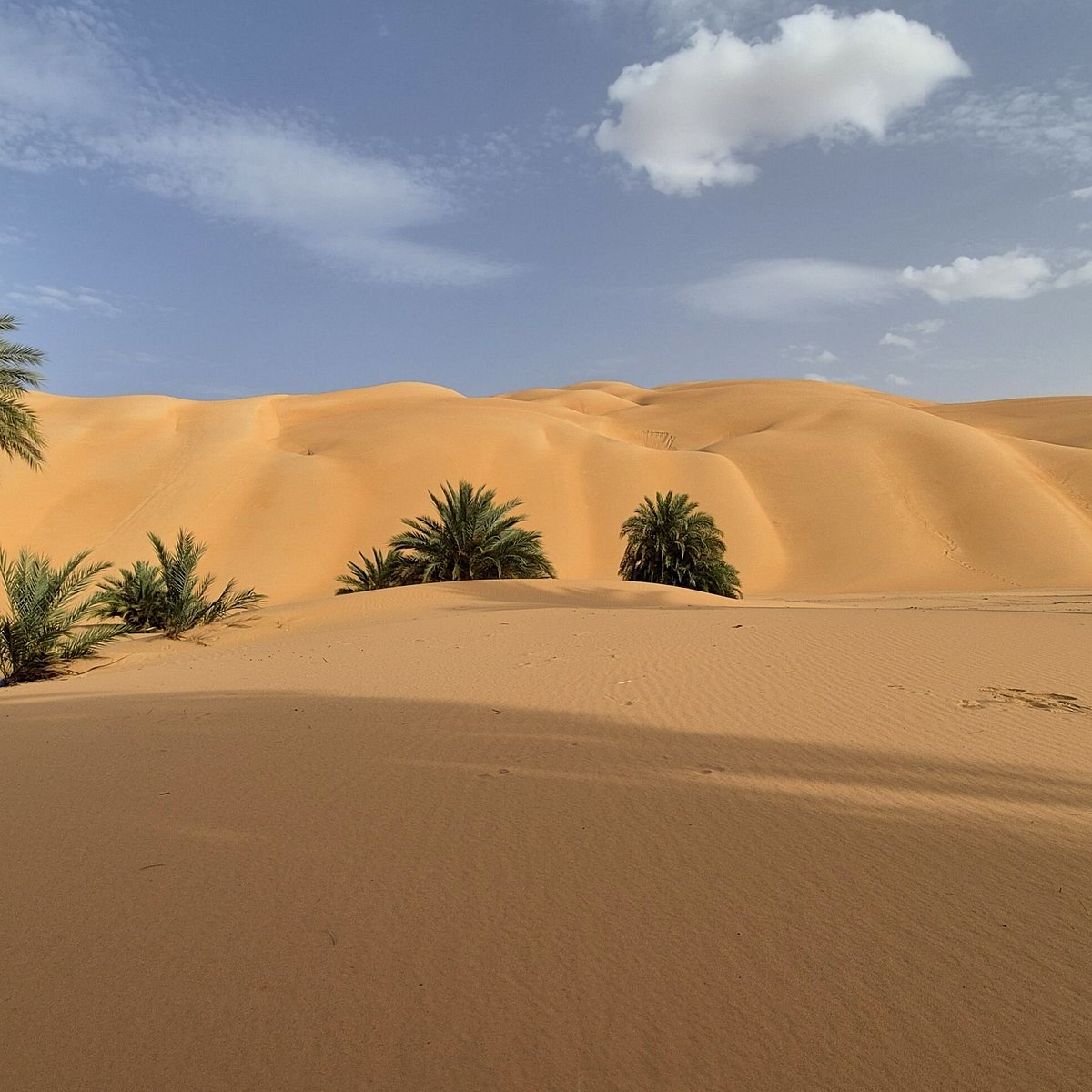
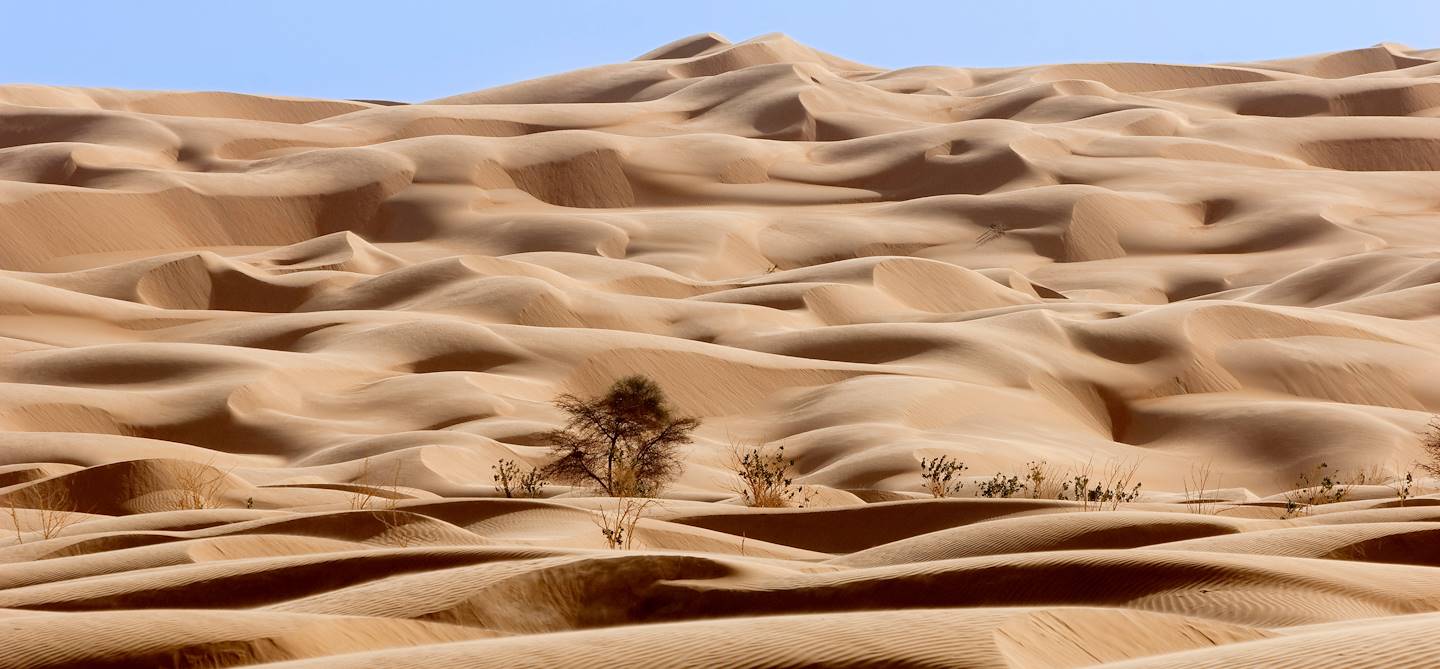
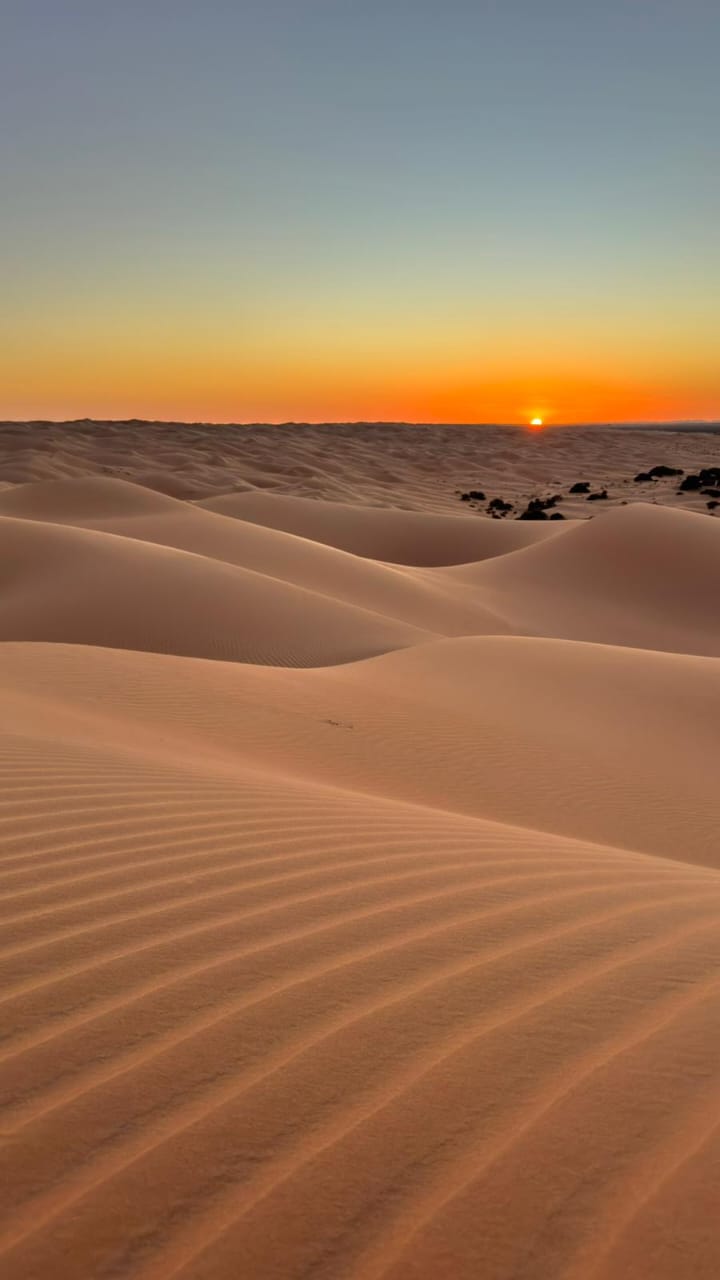
The Amatlich is a long, narrow dune belt of great golden sand ridges from which ochre rocky reefs emerge, and whose oases are true havens of serenity. Your gentle trek begins at Lemoïleh, a few kilometres from Atar and a favourite gathering point for the guides of the Adrar, where festive evenings are held around the traditional méchoui. At first light you follow the Adrar range to the magnificent Vocht gorges. Climbing the canyon opens a full 360° panorama before you reach the Eyreche plain and then the first dunes of the Erg Amatlich. From the palm grove of Gleïtat, south of the Adrar, the dune belt winds for more than 400 km towards the Atlantic. With your camel caravan you advance among Amatlich's radiant dunes, turning crimson under the sun. From oasis to oasis and well to well, you reach the plateau and the dizzying Tifoujar pass, from where dunes and stones, coloured by water and sun, appear within a deep fault. Your guide will point out the White Valley, one of the Adrar's most magical places. Through a canyon of steep gorges, where dunes seem to embrace the rock, you reach the N'Tezent canyon to gaze at the constellations: here the sky feels within arm's reach. Finally, through the N'Tourvine pass — one of the region's most striking, with its Saharan-western feel — you arrive at the hidden gorge of Terjit, a pocket of greenery where a stream sings and surely the most beautiful oasis in all Mauritania. In the shade of date palms and rock walls, it is the perfect place to sip a glass of tea while others enjoy a refreshing dip.
What to see

Maaden Oasis

Unlike the other oases of the Adrar, Maaden is relatively recent. Founded in the 1970s, it became — at the initiative of the Sufi scholar Cheikh Mohamed Lemine Sidina, spiritual leader of a Tijaniyya brotherhood and former mayor and senator of the Aoujeft district in the Adrar region — a community village built on equality and sharing. Driven by values of mutual aid, solidarity and collective life, the project allowed Maaden to flourish. Years later, Pierre Rabhi, a leading figure of agroecology in France, launched his final project here before his death, notably persuading the villagers to give up chemical fertilisers. Today the oasis is home to some 2,000 people, including many Moors from various tribes, and is dotted with vegetable gardens growing carrots, beetroot and beans. Known as Maaden el Ervâne, "the mine of knowledge", it is renowned for its community projects and, above all, for the extraordinary hospitality of its inhabitants — a place sure to win over any traveller in search of authenticity.

Natural

El Meddah

Set deep in a narrow canyon, the guelta of Tajemleilit releases a thin ribbon of clear water that runs some 800 metres among the palms. Following the gorge, we emerge at the first palm trees of the lush Amatlich region. Once up on the plateau, we look down over the valley of El Meddah. Here, wedged between the great dunes of the Amatlich erg and the mauve cliffs of the Adrar, the small town of El Meddah grows and prospers despite its isolation. Moorish society lives here in near self-sufficiency, to a rhythm set centuries ago.

Amazmaz (Adrar) — Neolithic Rock Art and Gueltas in the Mauritanian Sahara

Amazmaz lies in the western part of Mauritania's Adrar plateau, some 300 km north-east of Nouakchott. This little-known Saharan treasure brings together a fascinating prehistory and a spectacular oasis ecosystem. The ground here is strewn with traces of the past: Amazmaz was once an immense knapping workshop, where Neolithic pastoral communities left thousands of worked stone tools lying directly on the sand. Sheltered beneath a vast rock overhang, a major rock-art station preserves paintings and engravings depicting scenes of daily life and the wild fauna that once roamed a green, humid Sahara. Lower down, at the bottom of a rocky valley, the gueltas of Amazmaz — water basins fringed with fine sand — form a striking contrast with the arid landscape and offer hikers a shaded place to rest. A stage of arresting, untamed beauty, Amazmaz fits naturally into Adrar trekking circuits setting out from Atar, and local agencies — such as the expeditions shared on Azoueiga Tours — often stop here.

Timinit (Adrar) — Wadi, Gorges and Palm Groves of the Mauritanian Sahara

Timinit — a name that covers the Oued Timinit, the Timinit gorges and the settlement of Grâret Timinit — is a remarkable natural area in Mauritania's Adrar region, in the centre-north of the country, and a major destination for Saharan travel and camel trekking. The Oued Timinit runs through the Adrar massif, winding along the western edge of this arid plateau near other great wadis such as the Oued El Abiod (the White Valley) and Toueïrga. The landscape combines a vast sea of sand and imposing dune fields, steep gorges and rock walls sculpted by erosion, and cultivated plots (grâret) and green palm groves that contrast with the surrounding aridity. Timinit is a key stage for travellers exploring the Mauritanian Sahara, usually reached from Atar: camel treks of one to two weeks cross the wadi to link the historic city of Chinguetti with the oasis of Terjit or the village of El Maaden. The site is also listed as a birdwatching hotspot on eBird, for desert species such as the lanner falcon and the rufous-tailed scrub robin, and the area is traditionally used by nomadic camel and goat herders, notably of the Idawali and Ideïchilli groups. The wells of the Oued Timinit are vital watering points for caravans and herds, and life here remains strikingly authentic, built on the complementarity between the herders' life under the tent and the settled farming of the neighbouring oases.

Amatil (Adrar) — Golden Dunes, the 1908 Battle and Its Museum

Amatil is one of the outstanding natural and historical landmarks of Mauritania's Adrar region, where the memory of the national resistance meets the beauty of the desert. Its belt of golden dunes stretches for more than 130 kilometres, alongside sites that still tell the stories of the ancestors. On 30 December 1908, Amatil was the scene of one of the fiercest battles against French colonisation: Cheikh Hassana ould Cheikh Ma El Ainin led some 600 fighters against the occupying army commanded by Captain Pablon. The battle proved the resilience of the Mauritanian resistance and became a stumbling block to the French advance towards Atar. A dedicated museum on the site gathers testimonies, objects and weapons that document the period and honour the sacrifices of the resistance heroes. Geographically, Amatil is a sand sea whose formation goes back some 25,000 years: its high dunes are ideal for 4x4 desert safaris, long camel treks and nights under the stars, and the landscape combines fine golden sand with dark rocky escarpments and rugged mountain passages such as the famous Tifoujar pass. It also shelters palm groves and fertile valleys such as the oasis of Jelitat, a cool refuge for travellers and a window onto authentic Bedouin life, as well as Neolithic sites attesting to very ancient human settlement.

Foum Tizîgui (Adrar) — The Sand Gate into the Erg Amatil

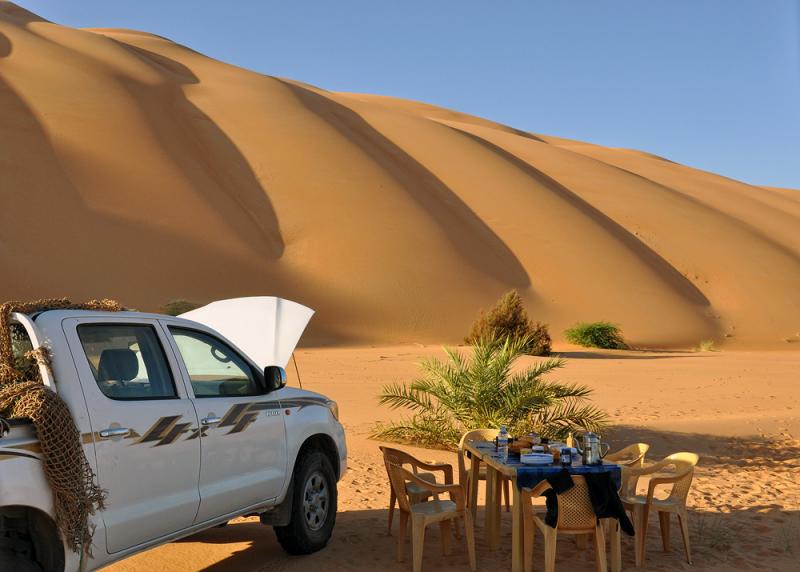
There are places where the desert agrees to open a door, and Foum Tizîgui is one of them. This legendary pass in Mauritania's Adrar is one of the rare gateways that allow a safe crossing of the Erg Amatil, a colossal dune belt stretching for nearly 400 kilometres and otherwise almost impassable. Here the track threads through a wall of golden sand and, in a few hundred metres, tips you from one world into another: the black rock of the Adrar massif behind you, the endless ocean of dunes ahead. As technical as it is spectacular, the crossing left its mark on the history of the great Saharan rallies, the Paris-Dakar among them, and it remains an obligatory waypoint on camel treks and adventure circuits linking Atar to the region's isolated oases, such as El Meddah. Travellers often arrive late in the day, when the low light sets the dune crests ablaze, pitch camp under the stars at the foot of the sand wall, and ride out at dawn through the gate of sand.