🇲🇷 Mauritania

Tichitt

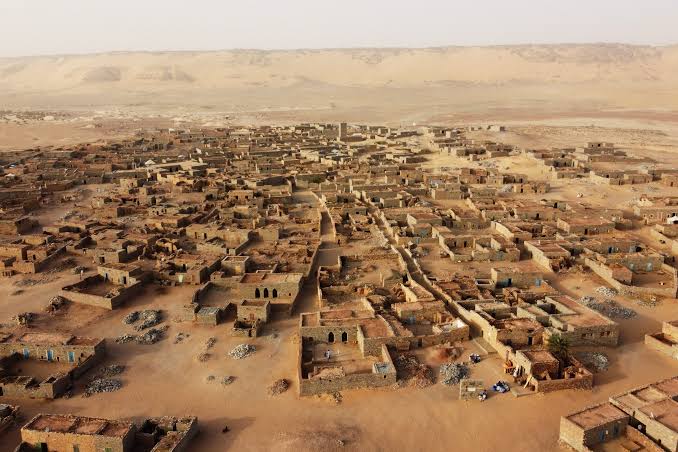
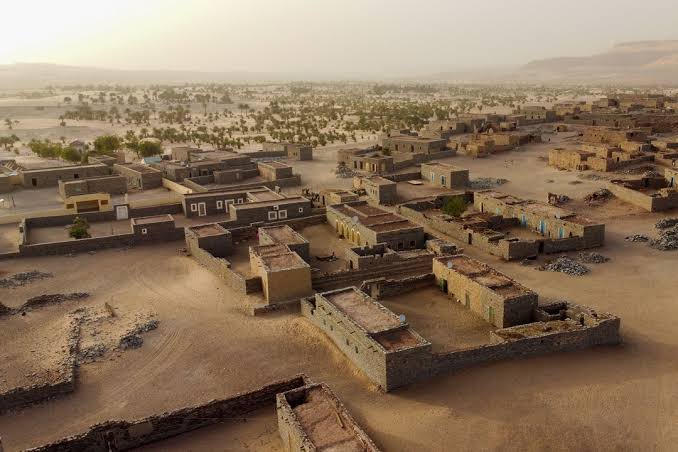
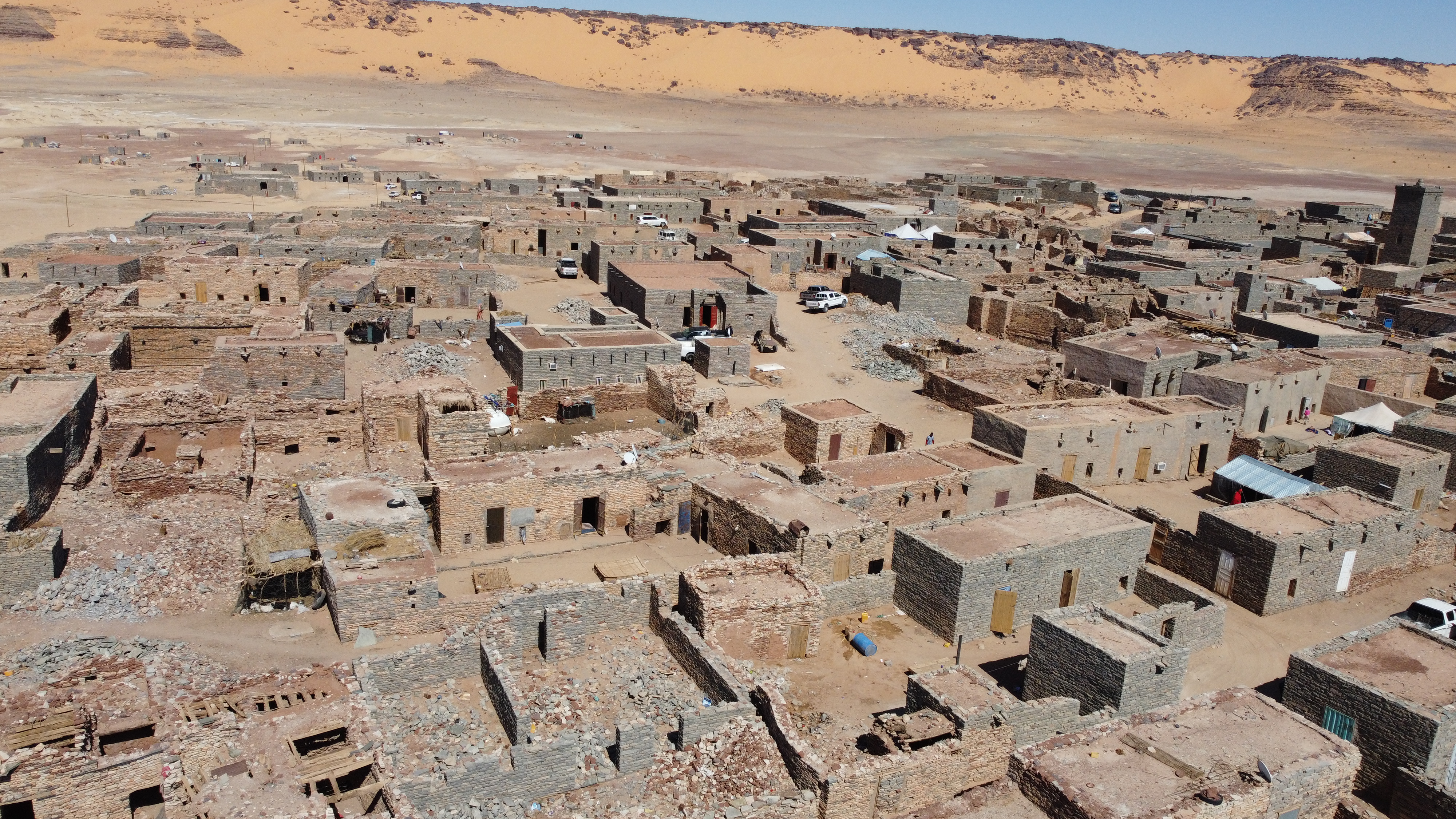
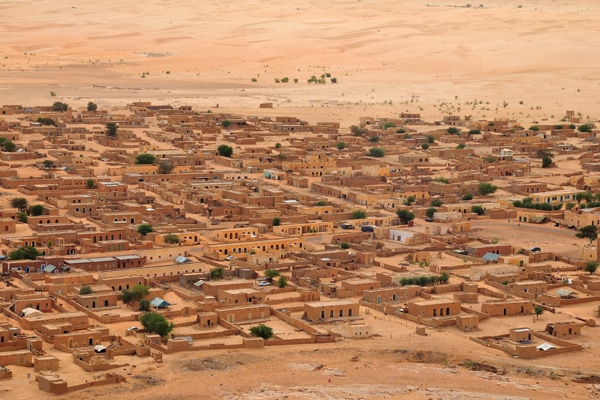
Tichitt is an ancient caravan city in Mauritania, listed as a UNESCO World Heritage Site. Located in the Tagant region, some 850 km east of Nouakchott, this thousand-year-old town is an exceptional historical and architectural jewel, although it suffers today from severe geographical isolation.

Neolithic origins: The culture of Dhar Tichitt goes back more than 2,000 years BC. Originally founded by the proto-Soninke people, it was home to one of the first structured agro-pastoral and urban societies in West Africa.

The golden age of the caravans: The present Islamic town was founded in the 12th century. From the 11th to the 19th century it became a major hub of trans-Saharan trade: caravans exchanged the gold, ivory and salt of the Sahel for textiles and spices from Europe and the Maghreb.

An intellectual centre: Beyond its merchant role, Tichitt established itself as a great centre of Islamic culture. Its scholars accumulated thousands of precious religious and scientific manuscripts.

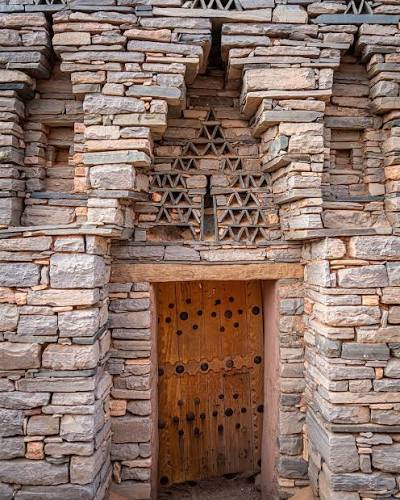
Vernacular stone architecture: Unlike other desert cities, Tichitt is distinguished by its courtyard houses built of coloured flat stones (schist), adorned with geometric motifs and characteristic wall niches.

The manuscript libraries: Notable families here jealously preserve thousands of ancient manuscripts and centuries-old documents in a careful hand.

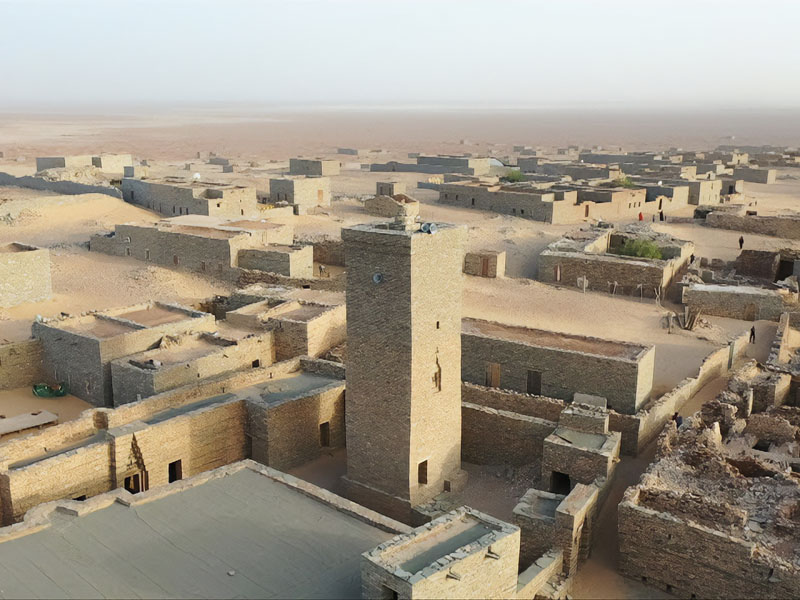
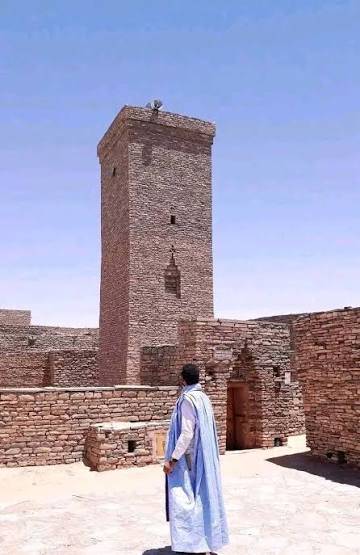
The historic mosque: The urban fabric is organised around its old mosque, with its characteristic square minaret.

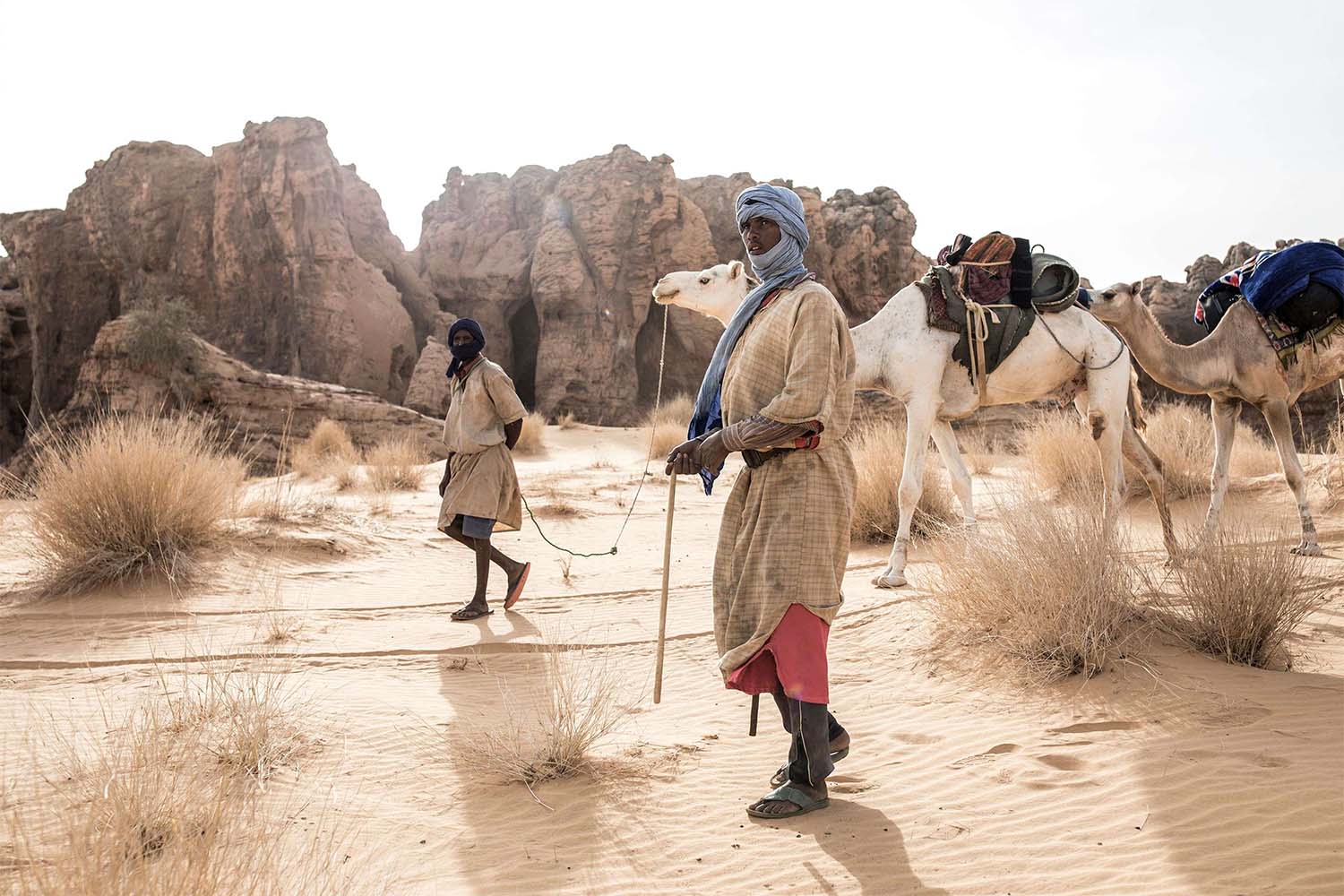
The oasis and the salt pans: The local palm grove and the traditional salt harvest, carried on camel-back, testify to an unchanged Saharan way of life.

Difficult access: Reaching the town requires a gruelling crossing of about 200 km of sand tracks from Tidjikja. This extreme isolation sharply limits the number of visitors.

The security impact: Once a famous stage of the Paris–Dakar rally, the town saw its tourist numbers fall after the race was relocated in 2009 and because of the past regional security instability in the Sahara.

Adventure tourism: Today Tichitt is discovered through specialised Saharan tourism circuits and 4x4 expeditions combining desert bivouacs with cultural visits.
What to see

The Elephant Rock (Makhrouga)

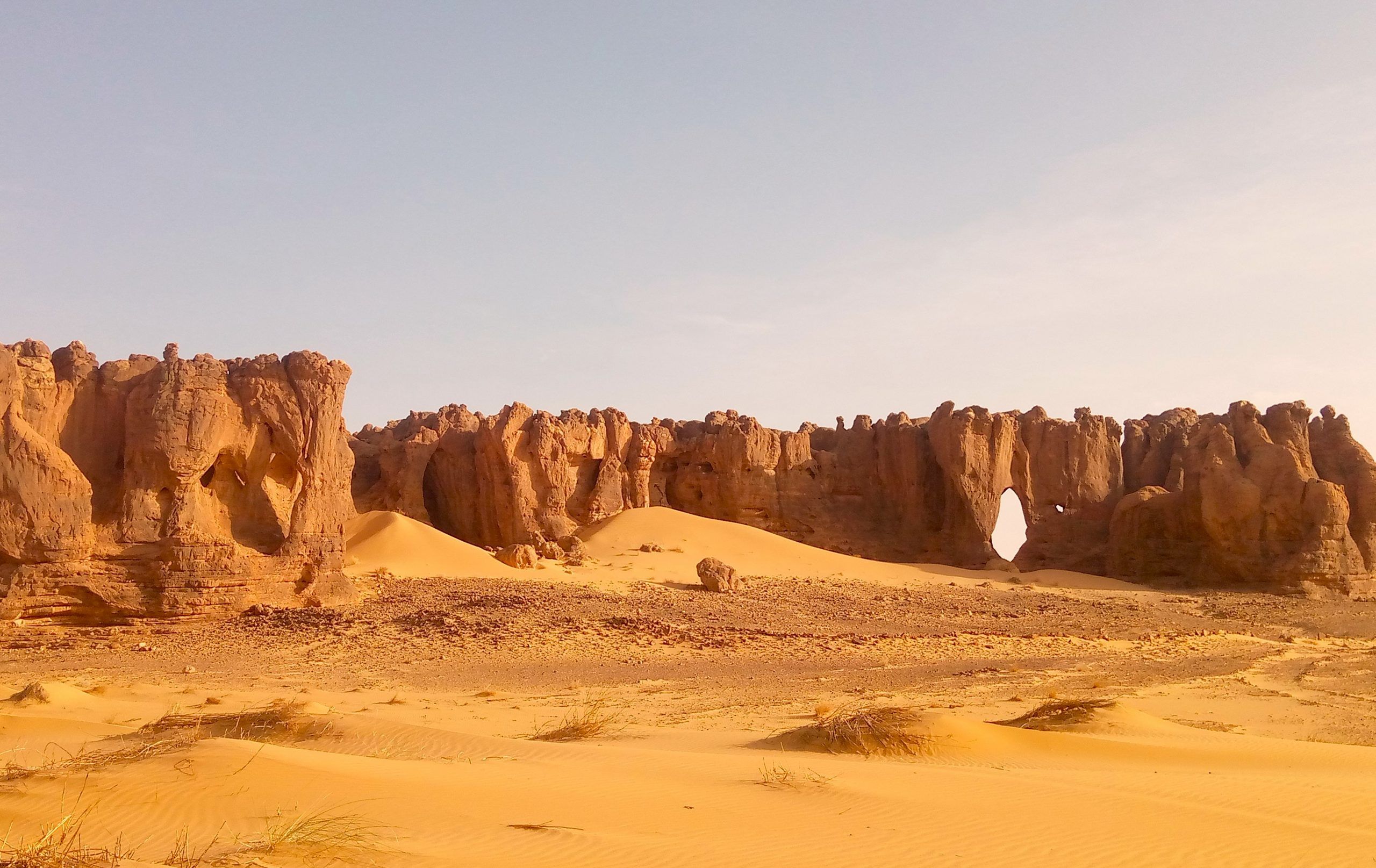
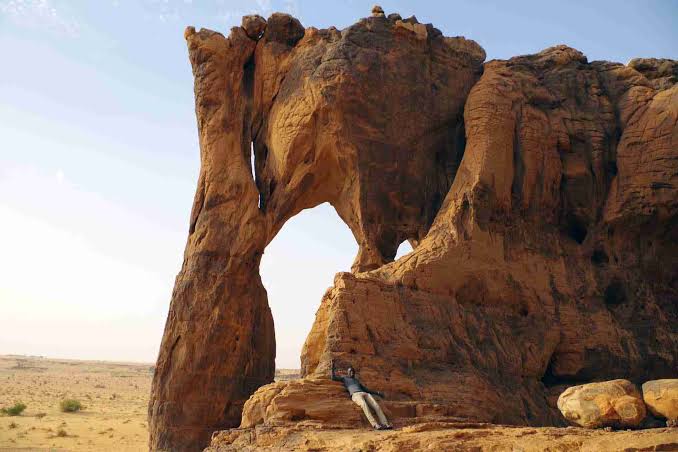
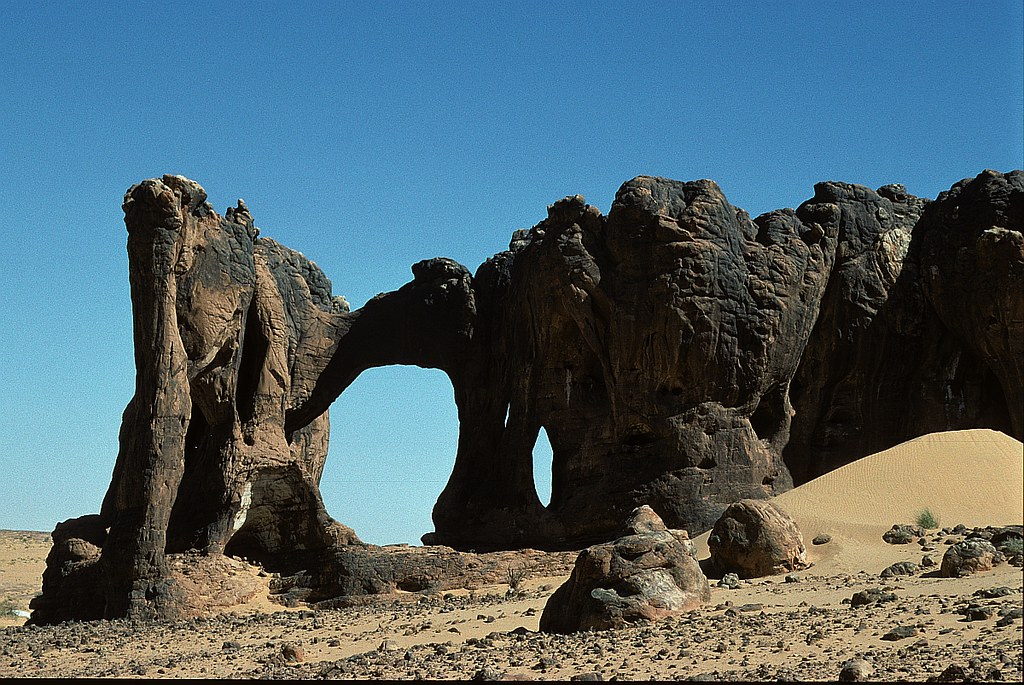
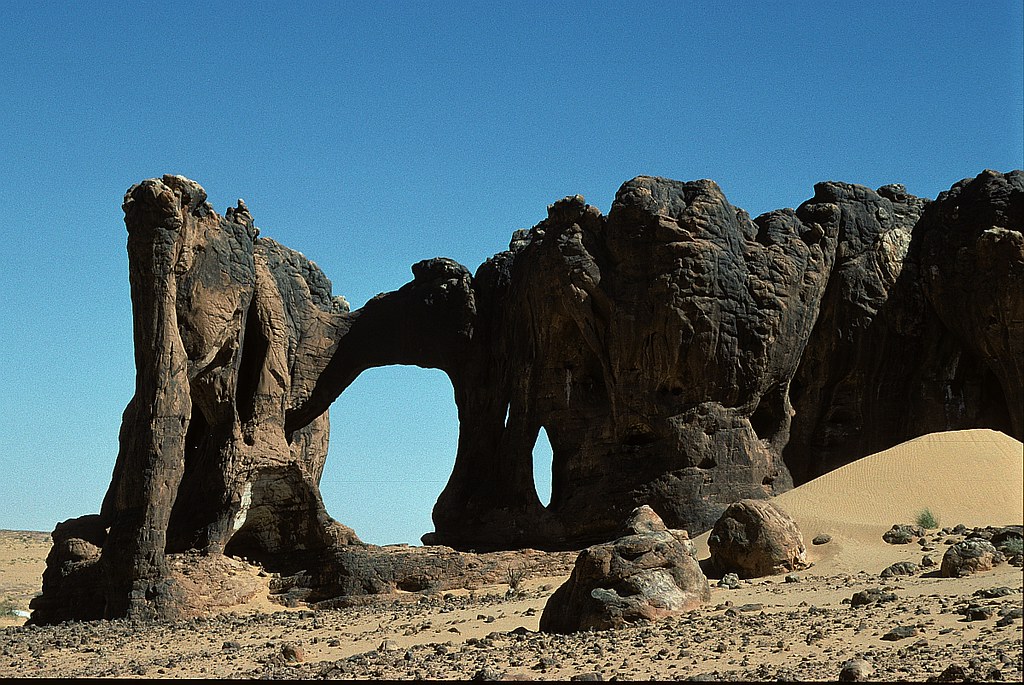
The Elephant Rock in Mauritania, also known locally as the Makhrouga Rock, is a spectacular geological formation located in the east of the Tagant region. This massive structure of red sandstone rises in the midst of the sand dunes, about 90 kilometres east of the historic city of Tichitt, on the track leading towards Oualata. A natural sculpture millions of years in the making The physical history of this rock begins millions of years ago. It is a sandstone monolith entirely sculpted by the forces of nature. The combined action of intense wind erosion — the sand-laden winds of the Sahara acting like sandpaper — and of the rare but violent desert rains has gradually eaten away at the rock. This natural process eventually brought out a striking silhouette: from one precise angle, the rock forms a head, a massive body and a perfect arch that imitates to perfection the trunk of an elephant plunged into the sand. A witness to prehistory and to the green Sahara Although the rock stands today isolated in the middle of an arid desert, its human history goes back to the Neolithic. The rock lies in the cultural zone of Dhar Tichitt, a region where human life abounded 4,000 years ago. A once-humid climate: At that time (the Holocene), the Sahara was not the desert we know today. It was a region of savannahs and lakes where large mammals lived — including real elephants. Archaeological remains: The region surrounding the rock (such as the sites of Akreijit or Dhar Néma) abounds in Neolithic stone villages, arrowheads, pottery and above all rock engravings. These drawings on the rock depict hunting scenes, human figures and the wild fauna of the period, proving that the local populations lived alongside the very animals whose memory the rock seems today to keep in stone. A landmark for the caravans of gold and salt Over the centuries, the Sahara dried out and gave way to the dunes. The Elephant Rock then became a crucial visual landmark for the nomad and merchant caravans travelling between the great caravan cities of Tichitt and Oualata. In the monotonous immensity of the desert, this unique silhouette allowed travellers and guides to find their bearings on the trade routes of gold, salt and manuscripts. Today, because of its very difficult access far from tarmac roads, the site remains preserved from mass tourism and absolutely requires a local guide and an experienced driver in order to be admired.

Natural

Lesbaa (Legtaa)

Lesbaa — also called Legtaa or El Qassaa — is the name given to a stretch of country, dunes and distinctive relief lying east of the historic town of Tichitt, in the Tagant region of central Mauritania. Part of the Aoukar desert, the area is known for its ruggedness and its natural beauty. Chains of high dunes and ergs follow one another here, their colours shifting through the hours of the day, in near-absolute silence and beneath one of the purest night skies in West Africa — an ideal setting for photography and desert bivouac. Nearby Tichitt, inscribed on the UNESCO World Heritage List for its ornate stone architecture and its manuscripts, is the natural base for any visit. Along the escarpment lie the remains of Dhar Tichitt, Neolithic stone structures counted among the oldest evidence of stone building in West Africa and a draw for lovers of archaeological travel. The Tichitt–Oualata track, which crosses or skirts the area, is one of the country's toughest and most exhilarating sand routes for off-road adventurers.

Aratane

Aratane is a historic desert area and oasis in the Tagant region of south-central Mauritania, known above all for its close ties with the archaeological town of Tichitt, and it stands as a significant geographical and historical staging post deep in the Mauritanian Sahara. Aratane lies on the desert route linking Tichitt to the surrounding plateaus, notably the Dhar Tichitt; between the town and the oasis rises the celebrated natural rock formation known as Makhrouga, one of the region's outstanding natural landmarks. In earlier times these lands were a vital corridor for the trans-Saharan caravans that carried gold, salt and cloth between North and West Africa. The area is also bound up with archaeological research on the ancient "Tichitt tradition" of the Neolithic, when dry-stone villages and early pastoral settlements spread across these desert margins. Despite the roughness of the tracks leading there and its profound isolation, Aratane and the neighbouring Makhrouga draw travellers keen on desert tourism and on exploring the far-flung palm groves at the heart of the Tagant.