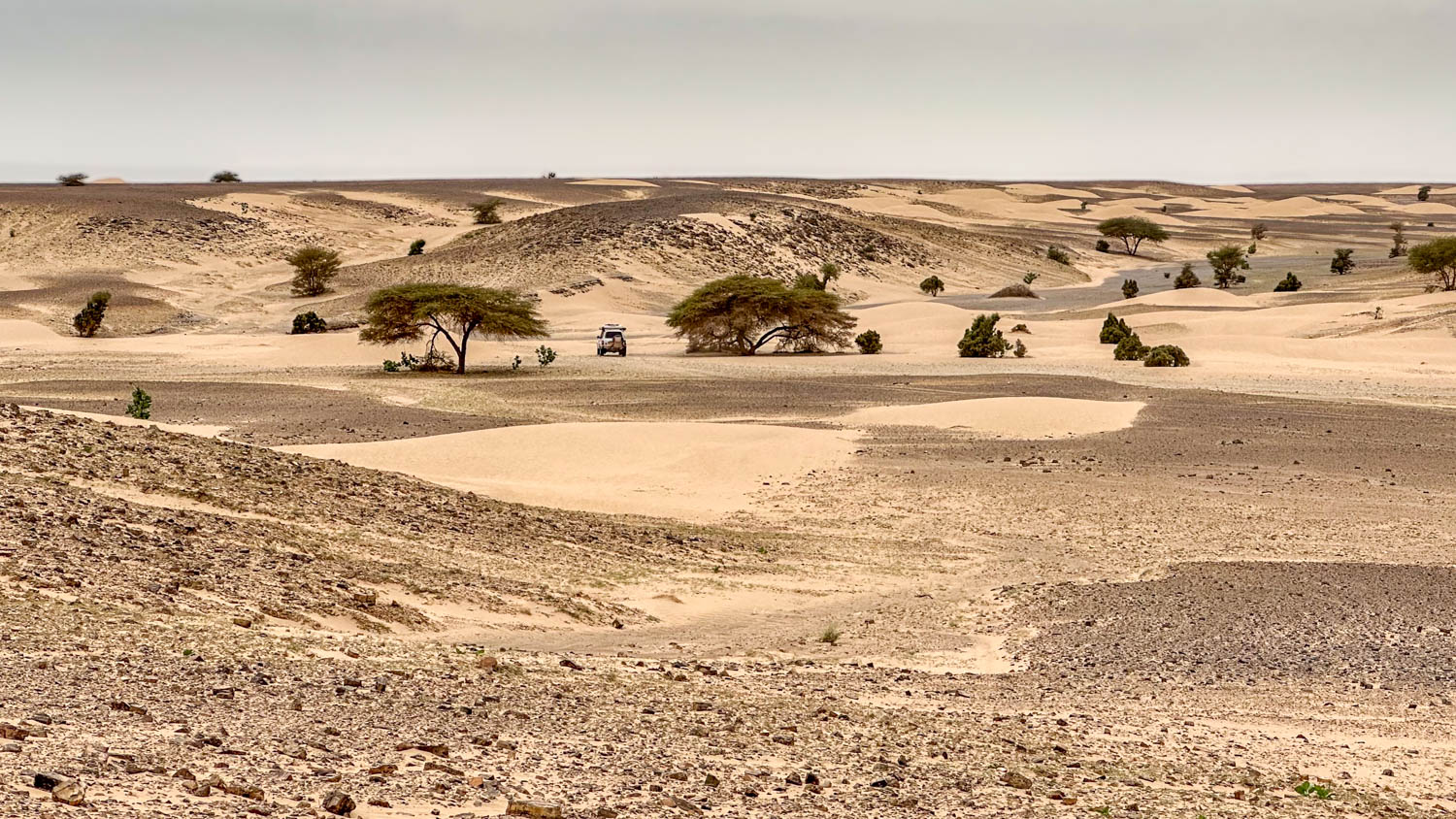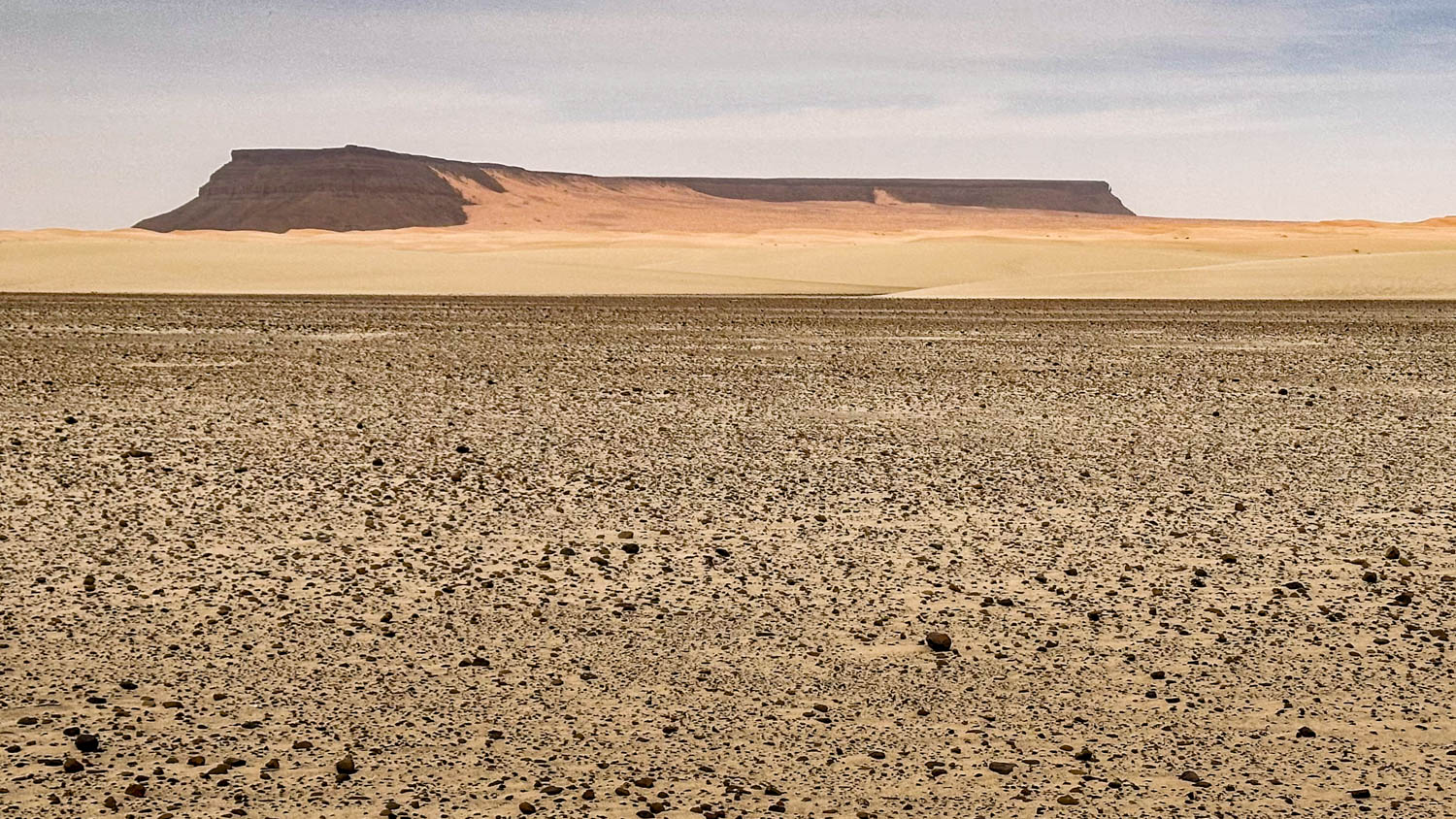
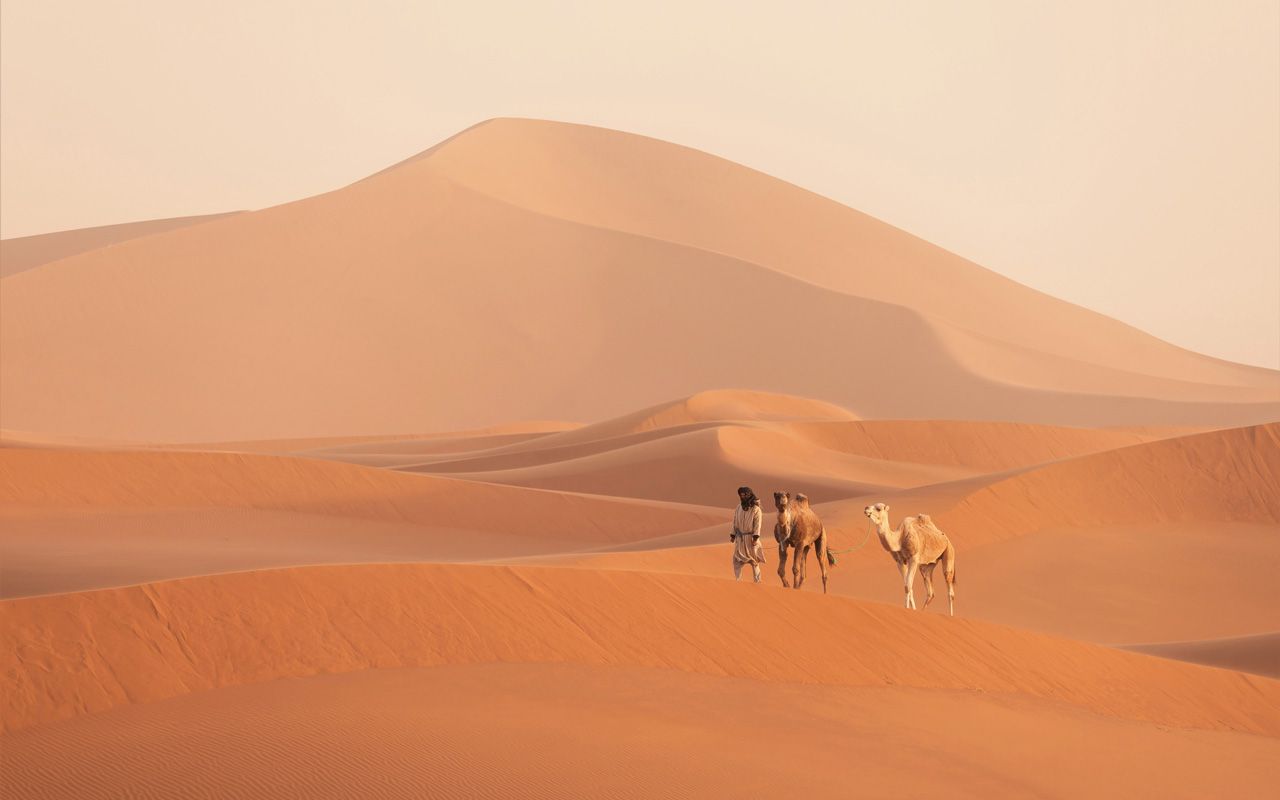
Six hundred kilometres north-east of Nouakchott, El Beyed is a tiny village set in a rocky cirque, on the bed of an ancient watercourse where a few acacias still survive and offer some shade. Around the huts and the khaimas — the square tents of the nomads — the setting is spectacular: flat-topped plateaus on one side, fields of dunes climbing the cliffs on the other. It has not rained here for years; the vegetation clings to the smallest crevices, the families are scattered over some ten kilometres, and the wells are often brackish. The only solid building is the school, put up by an NGO.
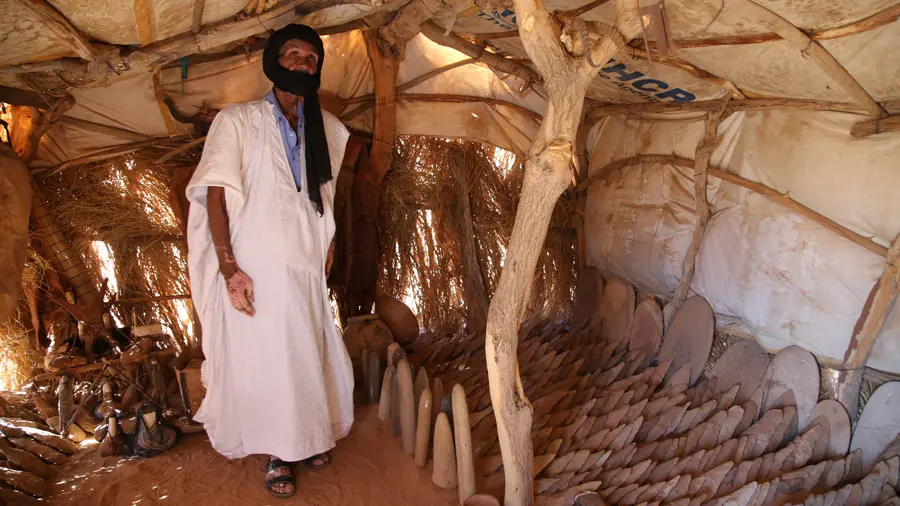
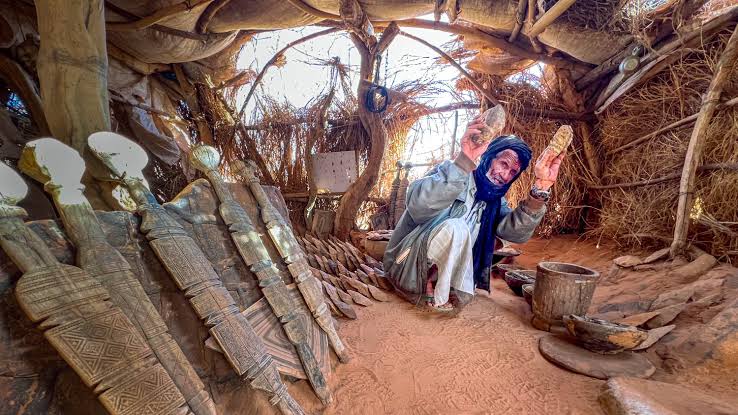
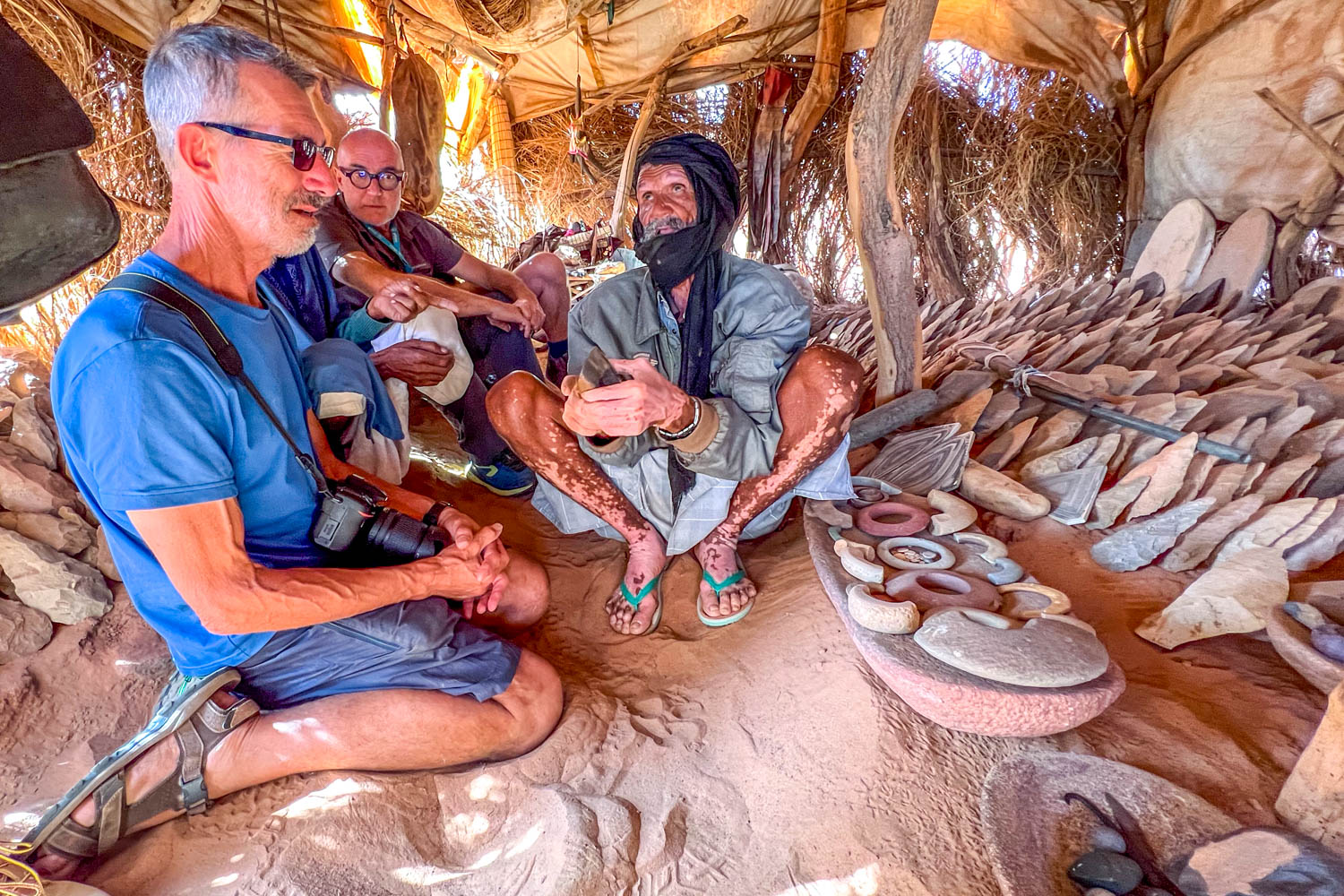
Above all, though, El Beyed is one of the great prehistoric sites on the planet. The ground is literally strewn with hand axes — the universal tool of the Palaeolithic, knapped here for more than 600,000 years and used for skinning, cutting and scraping alike. To these are added axes, arrowheads, pottery and a great many rock engravings. Despite looting by unscrupulous dealers, the site remains exceptional.
Visitors are welcomed by Yeslem, the village chief, who prospected for many years alongside Théodore Monod and who, on his advice, created a small local museum against the day when tourism finally arrives. Nearby lie the remains of an old fort from the French colonial period, a guelta — a natural basin holding water year-round, an absolute rarity in this area, on which a camp eight kilometres downstream depends entirely — along with gullies left by ancient storms and dune ridges settled along the crest lines.
El Beyed has to be earned: no tourist infrastructure, barely a vehicle for days on end, but a silence, a hospitality and a historical depth that few places in the world can offer.